B2C Software Is Going to Zero
A few weeks ago I was bored and had tokens to burn before my weekly reset, so I figured I'd try vibe coding a Wispr Flow clone. 30 minutes and a bit of back and forth later, I had something that worked. Not 100% feature parity, but good enough that I don't need to pay for Wispr Flow anymore.
Then I did the same thing with a budgeting/finance app we use. The longest part wasn't the code. It was signing up for Plaid and getting prod access, because there were so many forms and I got lazy filling them out. Think about that for a second - the hardest part of rebuilding a paid finance app was the paperwork.
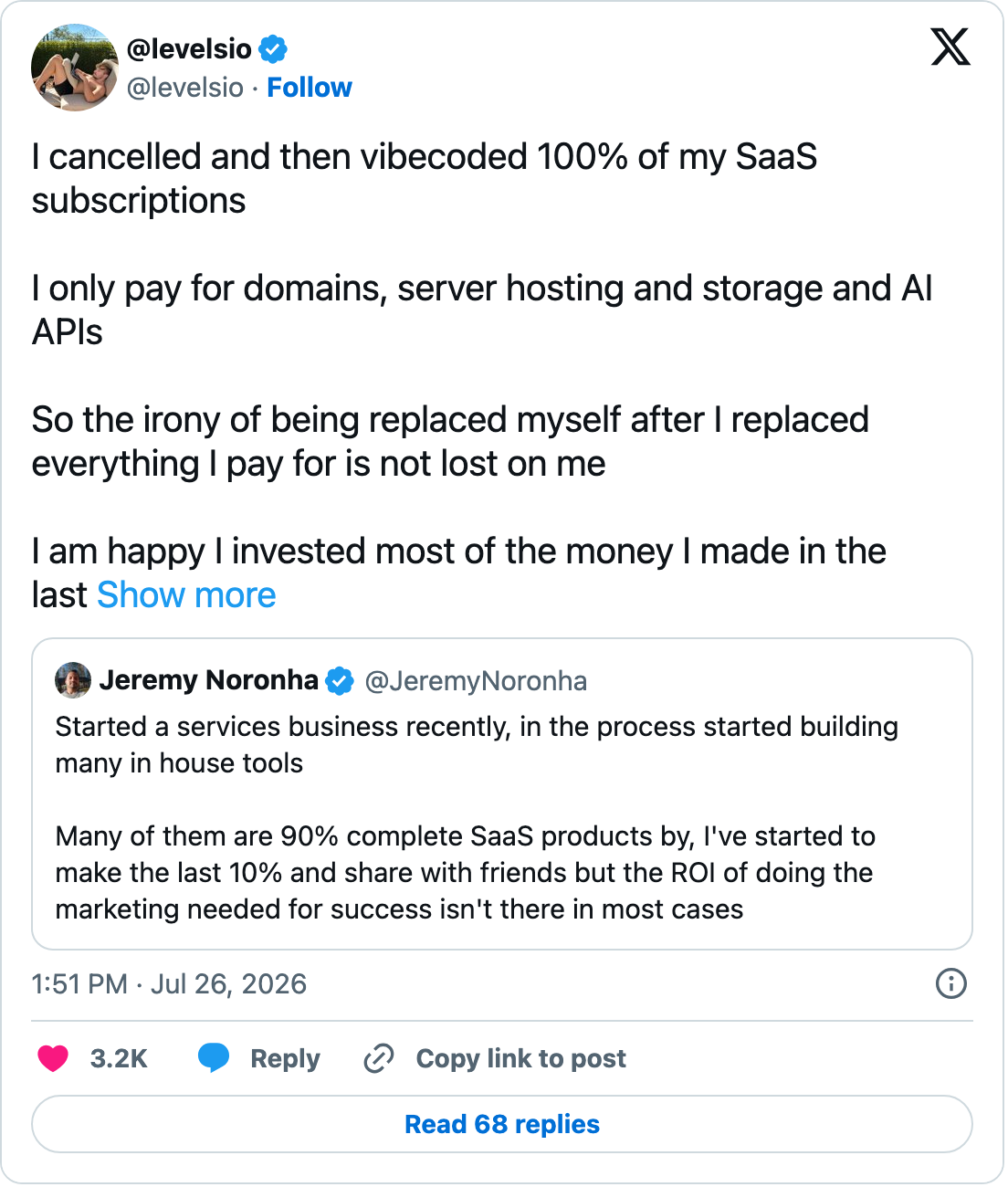
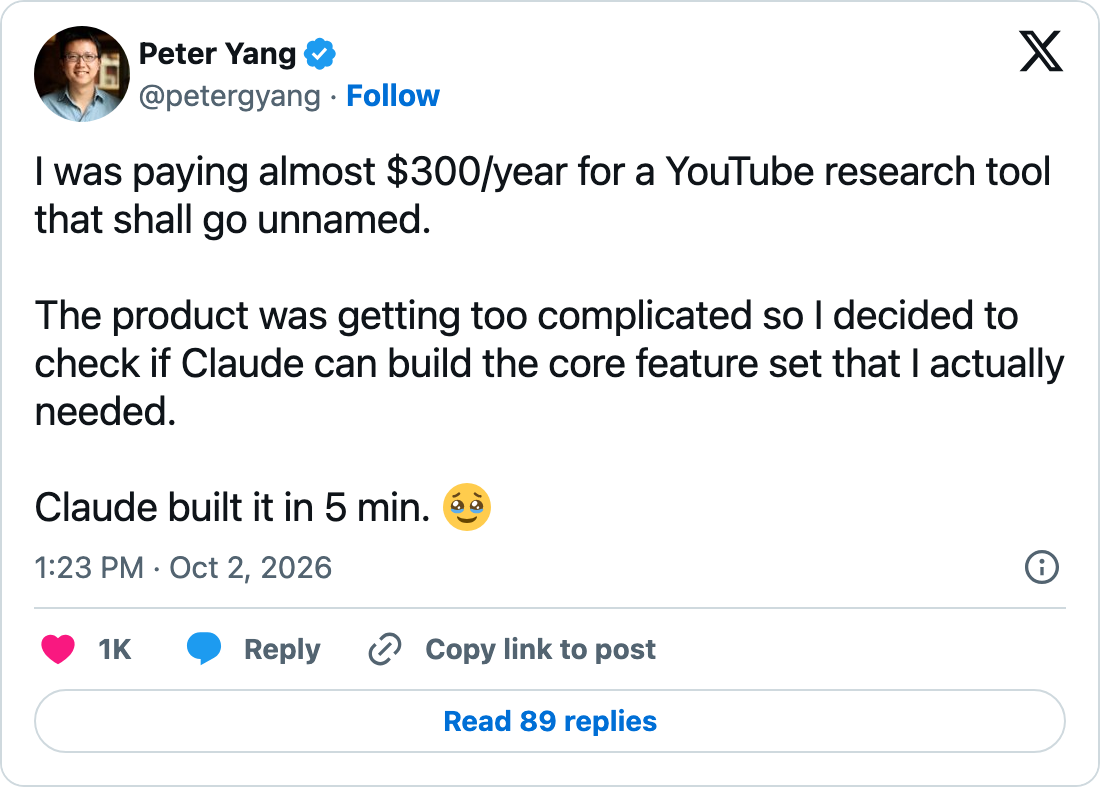
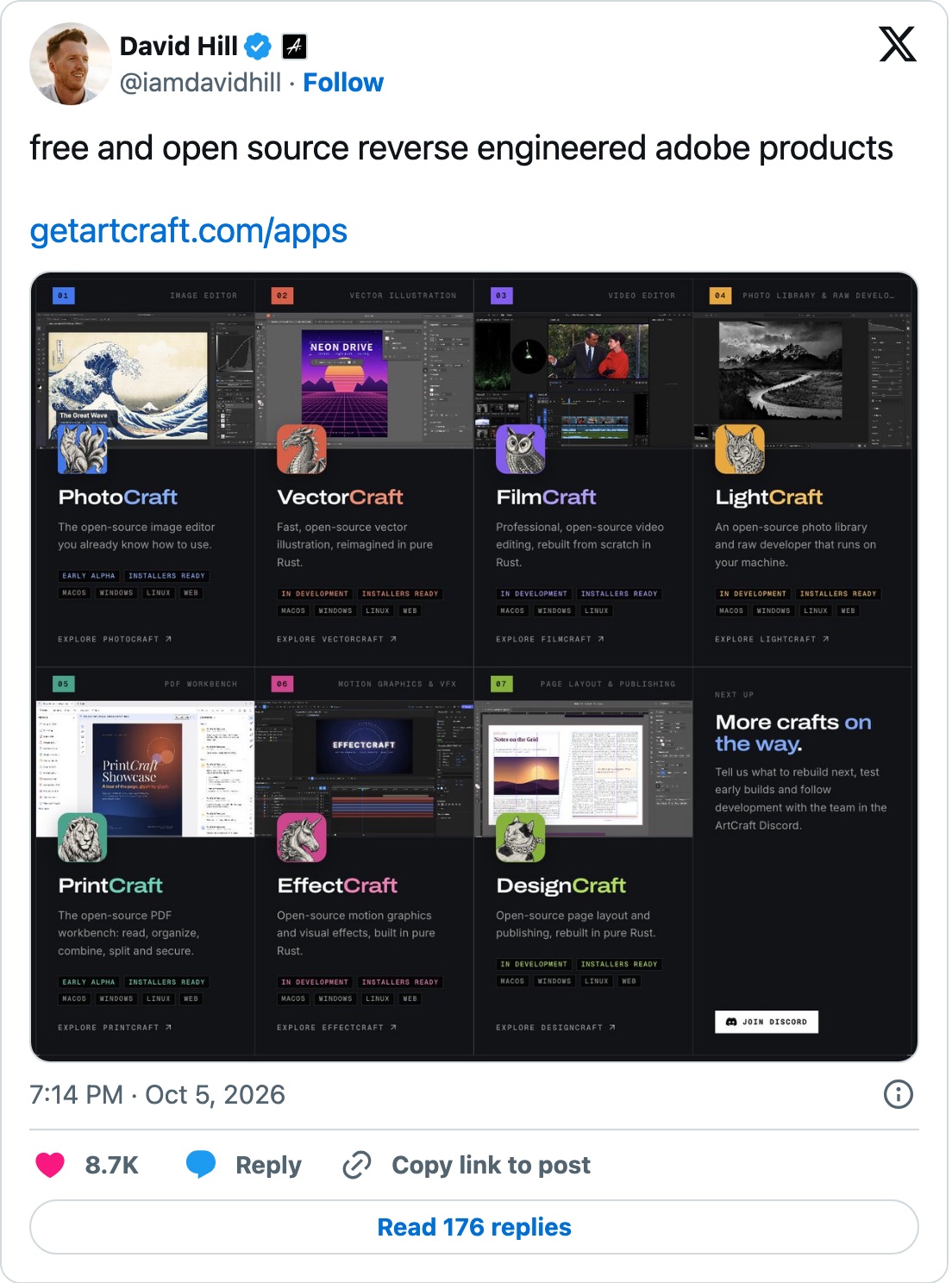
And it's not just me noticing. A few of the most prominent indie hackers are cutting costs and rolling their own software. Others are reverse engineering products like Adobe's and open sourcing them.
We're really early
Mind you, Claude Code and Codex are barely a year old as I'm writing this. Most people still haven't tried them, and the ones who have are mostly developers. We're in the early adoption phase.
But give it time. Let's say 5 (I can see 2-3) years. The tools get better, cheaper and easier for regular people to use. At that point I think nearly every B2C software product without a physical moat or network effects gets commoditized. If anyone can make a "good enough" version of your app in an afternoon, you can't keep charging $15/month for it.
My guess is 95%+ of software pricing power is heading to 0. Not the value of software - software will be everywhere. Just the ability to charge for it.
What's left
So what can't you clone in 30 minutes?
- Network effects. I can build an Instagram clone. I can't build Instagram's users.
- Access and permission. Banks, Plaid, licenses, approvals. (Exactly where my weekend project slowed down.)
- Audience. If you have 300k followers and launch a B2C product, it's still going to get traction - even if someone could clone it in an afternoon. A normie launching the exact same thing gets crickets. Code is easy to copy, people paying attention to you isn't.
- Atoms. Anything that has to physically exist - get made, shipped, installed or fixed.
That last one is where I think a lot of attention is about to go.
The move to atoms
There's going to be a lot more focus on atoms based businesses, and I think two groups drive it.
The first is normies like me. The same tools that let me rebuild an app in 30 minutes can also help me design a part, pick materials, make the CAD file, find a supplier and walk me through putting it together. Stuff that used to need an engineer or years of experience now mostly needs curiosity and some patience. A lot more people are going to bring physical products and real-world outcomes to life.
I've already done a small version of this. I built CreateMyHeroBook.com - parents upload a photo of their kid and get a personalized, illustrated hardcover storybook with their kid as the hero. I didn't buy a printer or set up a warehouse. I plugged into Lulu's print API, so when someone checks out, the order goes straight to Lulu and they print the book and ship it to the customer's door. A website turns into a real book in a kid's hands, and the whole thing is just a few API calls.
The second group is entrepreneurs who know where software pricing is heading and don't want to be on the wrong side of it. If your app can be cloned, your margins disappear. If your thing has to be manufactured and delivered, it's a lot harder to copy.
What I'd bet on
I'd expect SendCutSend to go parabolic. If you haven't used it - you upload a design file, they cut, bend and finish the part and mail it to you. That's exactly the kind of company that wins when millions of people can suddenly make design files.
I'd also expect some kind of physical "AWS" to show up. AWS meant you didn't need your own servers to launch software. The physical version means you don't need your own factory to launch a product. You describe what you want, an llm turns it into software and files, and a network of machines and shops turns those files into a real thing at your door. llm -> software -> physical.
Bottom line
Software isn't going away. It's just going to be cheap, everywhere and really hard to charge for. The money and the moats move to the stuff that's hard to copy - people, permission and atoms.
If I were starting something new today, I'd look at the physical world - things like physically verified truth (uber for verification / rentahuman?), atoms and moving them, energy, crafting unique experiences, and land.